Silence is a technology
Three-phase AC fan speed control
Sinusoidal control for three-phase AC fans: how the DSV series avoids additional magnetic noise, regulation-induced electrical distortion and installation complexity in HVAC&R fan systems.
In HVAC/R systems, modulating fan speed is not simply a matter of reducing airflow.
It means controlling motors that, with other control technologies, may require additional technical precautions: humming, magnetic noise, harmonic distortion, electrical stress on the motor, stray currents through the bearings, additional filters, special cables and increased installation complexity.
The DSV series was developed to meet this specific requirement: sinusoidal AC voltage step control, designed to keep the fan system efficient, quiet, compliant and suitable for standard high-slip three-phase asynchronous motors.
From the application requirement to Selpro’s engineering solution
| Customer | International manufacturer of air-cooled heat exchangers and HVAC/R systems for refrigeration and air conditioning. |
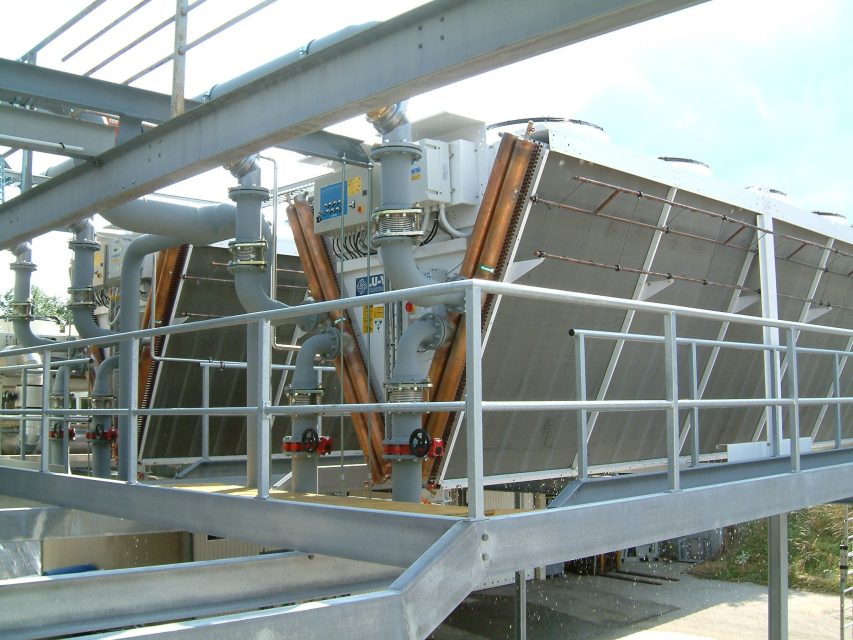
| Application | Remote condensers, dry coolers and air-cooled heat exchangers with three-phase AC fans up to 12 poles. |
| Requirement | Modulate fan speed while keeping the operating parameter stable and without introducing electrical disturbance, acoustic disturbance or magnetic noise. |
| Constraints | Use of standard asynchronous motors, existing standard cabling, retrofit and revamping capability, full EMC compliance and simple single-person plug-and-play installation. |
| Selpro solution | DSV with sinusoidal step-voltage control, toroidal autotransformers with grain-oriented cores and zero-cross switching. |
| Result | Stable control, sinusoidal waveform to the motor, reduced installation complexity and measured speed/power data. |
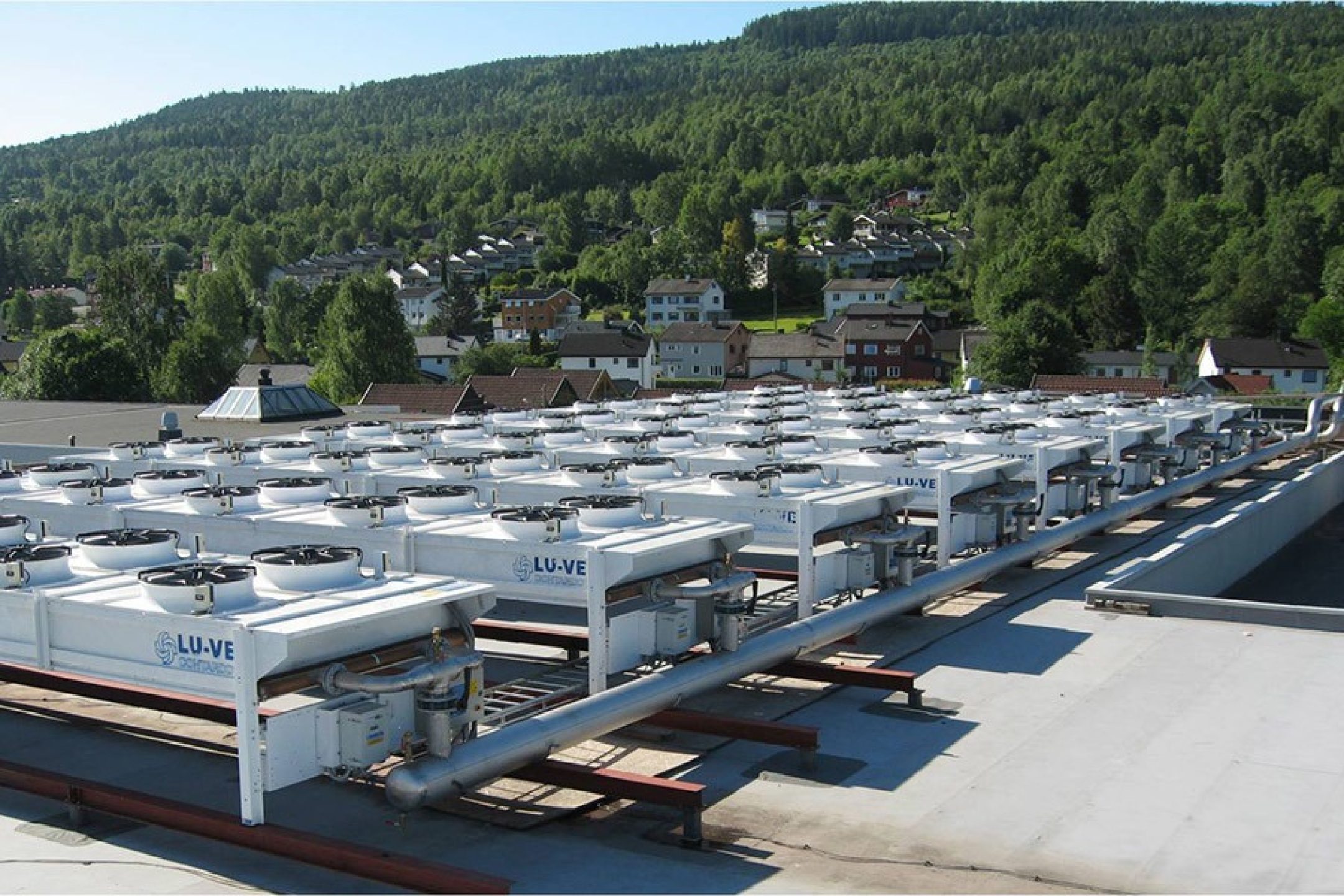
Controlling AC fans without modifying the existing system
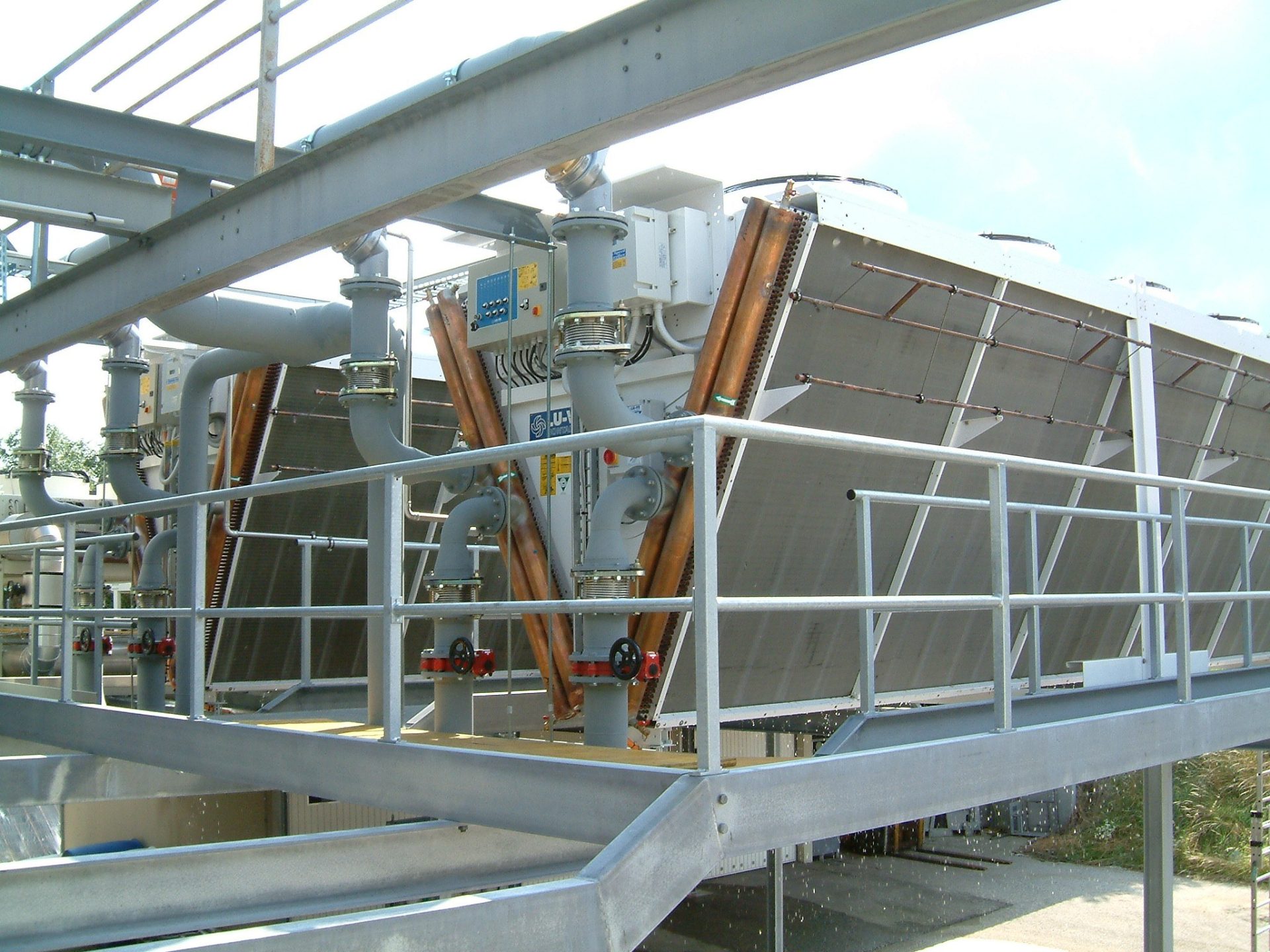
The requirement came from the need to modulate heat rejection capacity by controlling the speed of AC fans on an air-cooled heat exchanger, while keeping the design parameter — temperature, pressure or airflow — stable and improving efficiency and energy savings under part-load conditions.
However, the system had to meet one key constraint: controlling fan speed without generating electrical disturbance back to the mains, without adding magnetic noise to the motor and without forcing the customer to replace motors, cabling or the existing electrical architecture.
The requirement was therefore not simply “to reduce fan speed”, but to achieve a form of control suitable for operating HVAC/R systems: quiet, compliant and applicable even in retrofit projects.
When speed control introduces electrical and acoustic disturbance
Traditional control technologies solve the issue of continuous modulation, but in certain HVAC/R applications they can introduce significant side effects.
- Inverters provide continuous speed control, but the PWM output may require sinusoidal filters on the motor side, harmonic filters on the line side, EMC filters, shielded cables and inverter-duty motors with reinforced insulation. They can also introduce insulation stress and stray bearing currents when motors are not specifically designed for inverter supply.
- SCR phase-angle controllers are simple, compact and less expensive, but they distort the voltage waveform at intermediate operating points, with possible additional magnetic noise and harmonic distortion that varies according to the working point.
- In many HVAC/R applications, this increases system complexity, the number of accessory components and the design and commissioning precautions required in the field.
The challenge was therefore broader than speed control alone: the application needed a solution able to modulate the fans without amplifying the typical effects of electronic frequency control or phase-angle voltage control.
Standard motors, existing cabling, compliance and retrofit
The solution had to fit into a real application environment, with specific technical constraints:
- maintain the use of standard high-slip three-phase asynchronous motors;
- avoid replacing existing cables with dedicated shielded cables;
- remove the need for external filters associated with the control method;
- allow installation on existing systems as well as new machines;
- provide control compatible with stable operation of the heat exchanger’s working parameter;
- keep the solution manageable, modular and suitable for field service.
These constraints are the reason why the DSV series should not be seen as a generic alternative to any control technology, but as a specialised solution for HVAC/R applications where control quality, low noise and installation simplicity are part of the project requirements.
DSV: sinusoidal AC voltage control for three-phase AC motors
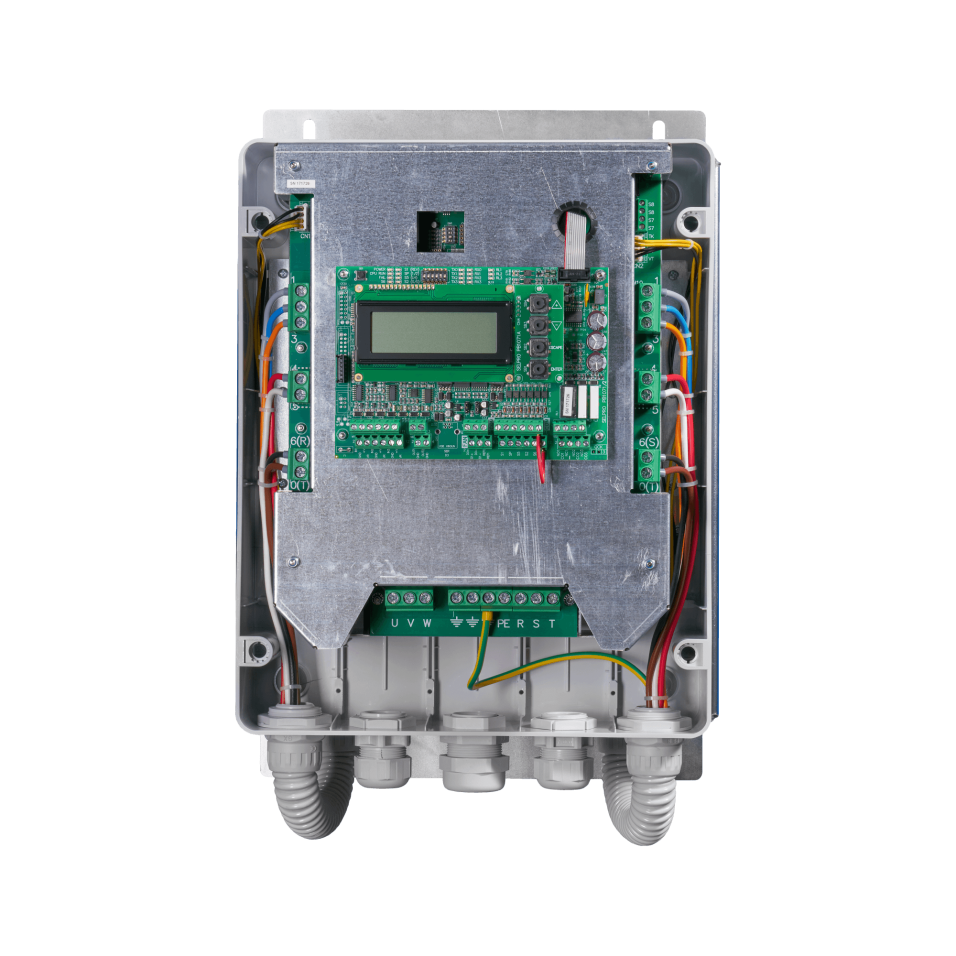
Selpro developed the DSV series to control the speed of three-phase AC fans through a different and hybrid principle: not by reconstructing the waveform through high-frequency switching, and not by distorting it through phase-angle control, but by selecting proportional levels of sinusoidal voltage generated by toroidal autotransformers with grain-oriented cores.
At each voltage level, the motor receives a sinusoidal waveform at the mains frequency.
Switching between the different voltage levels takes place in zero-cross mode: at voltage zero when closing the circuit and at current zero when opening it.
This eliminates switching peaks, protects the electromechanical components and keeps the control electrically clean.
The DSV is therefore suitable for remote condensers, dry coolers, chillers and air-cooled heat exchangers with standard high-slip three-phase AC motors, especially where speed control must be quiet, stable and compatible with existing motors and cabling.
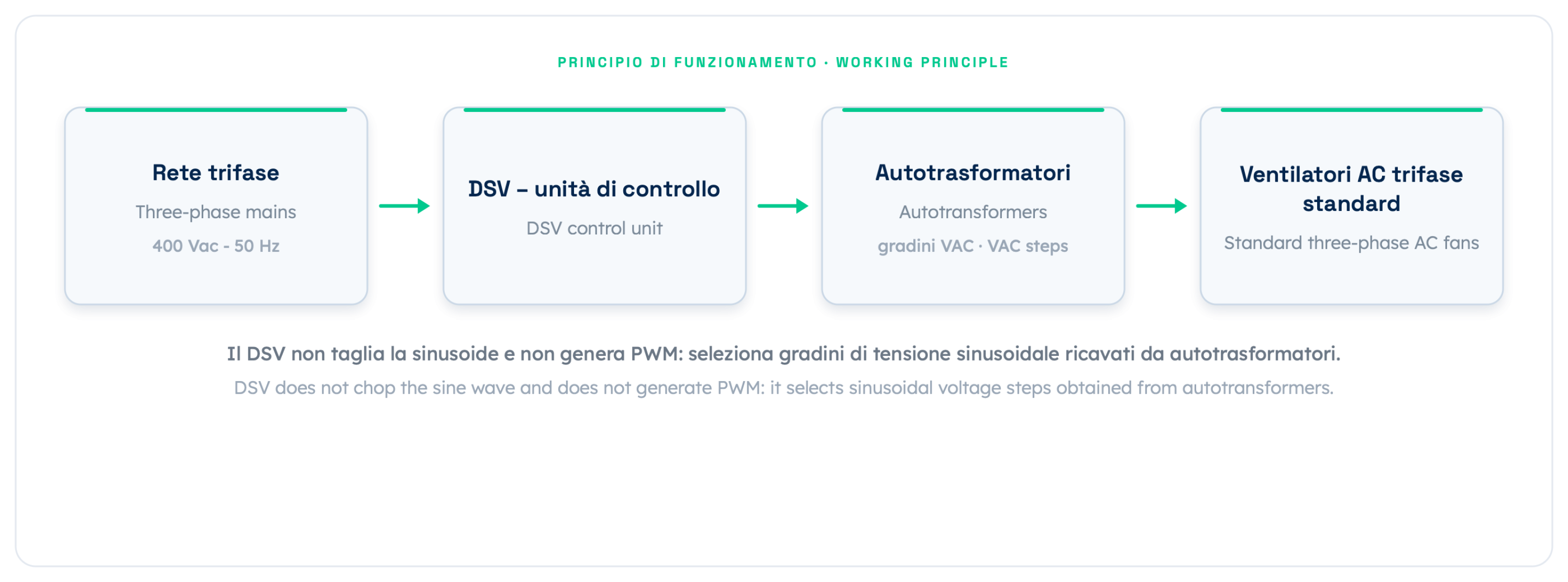
Six voltage steps and a consistently clean sinusoidal waveform
The DSV architecture combines a digital control unit with high-efficiency toroidal autotransformers and a set of power relays.
The voltage steps are selected to make effective use of the fan group curve, especially at low speed, where many HVAC/R systems operate for long periods.
The control logic includes OFF and six VAC steps, with two additional ON/OFF auxiliary steps for extra power.
The system can be configured in proportional Master or Slave mode and integrated with supervision systems via Modbus RTU (RS-485). Dedicated logic for Wet & Dry applications can also be implemented according to the project configuration.
The key technical point remains the waveform: the DSV does not generate PWM distortion and does not cut the sine wave.
The motor operates with a sinusoidal voltage, closer to direct mains supply behaviour than other speed control technologies.
Modulated speed and lower absorbed power at low operating points
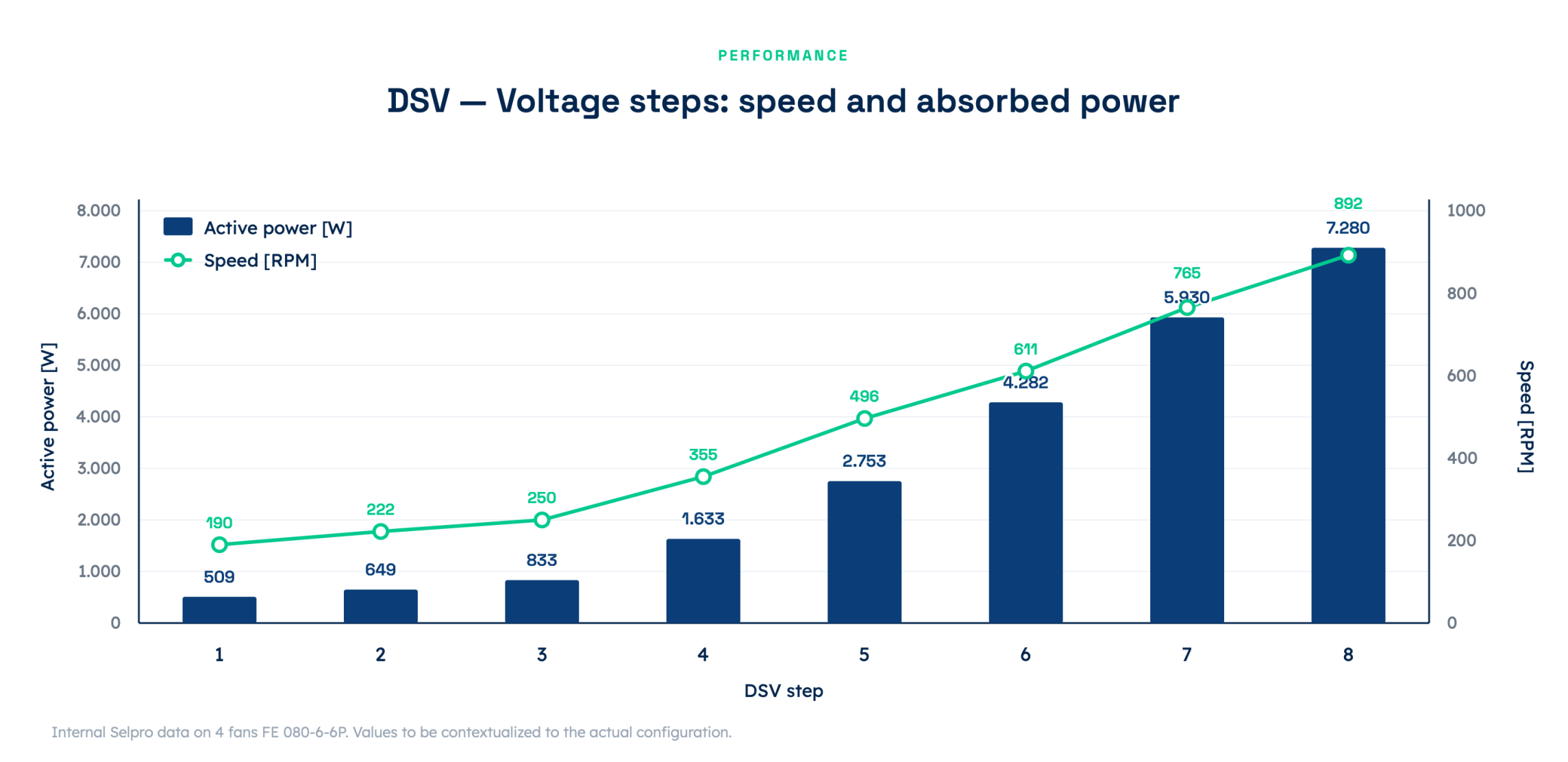
Test data on a DSV applied to four Ziehl-Abegg FE-080 fans show a particularly interesting behaviour for systems that operate for many hours at part load.
At the first step, the system already reaches approximately 20% of nominal speed with 7% of total power. At the fifth step, it reaches approximately 55% of speed with 38% of power.
This allows the system to maintain a useful level of airflow with limited power consumption under intermediate operating conditions.
| Step | RPM | VAC voltage | Active power |
|---|---|---|---|
| 1 | 190 | 65 V | 509 W |
| 2 | 222 | 75 V | 649 W |
| 3 | 250 | 85 V | 833 W |
| 4 | 355 | 120 V | 1,633 W |
| 5 | 496 | 160 V | 2,753 W |
| 6 | 611 | 210 V | 4,282 W |
| 7 | 765 | 280 V | 5,930 W |
| 8 | 892 | 400 V | 7,280 W |
Measured step table on four FE 080-6-6P fans.
The values are internal Selpro test data and depend on the fan system configuration: number of fans, motor pole count and heat exchanger characteristics.
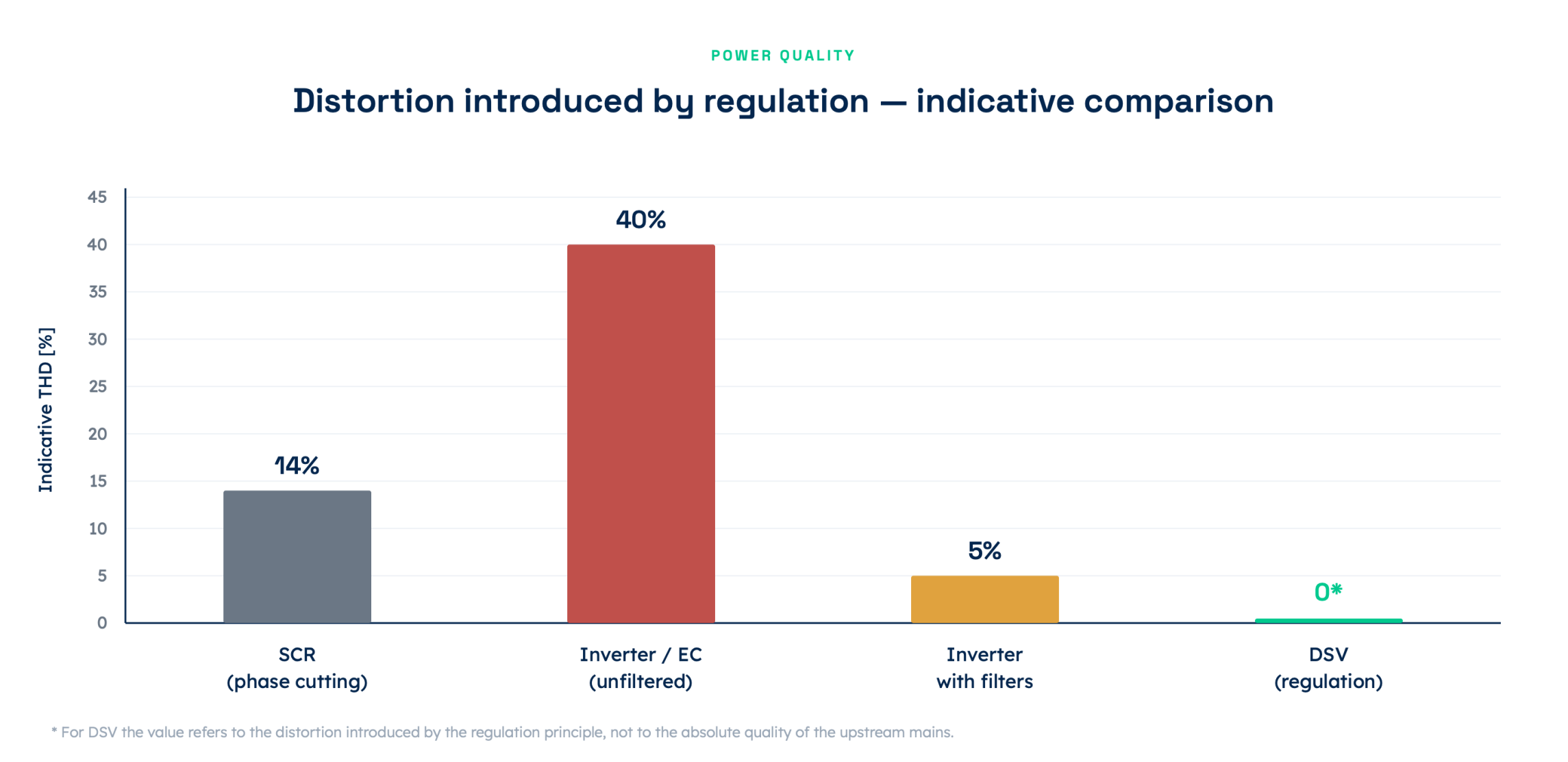
Distortion and filters: what changes compared with traditional solutions
When comparing technologies, the point is not only to control speed, but to understand what happens to the waveform and to the electrical environment during regulation.
By working with sinusoidal voltage steps and zero-cross switching, the DSV does not introduce the typical distortion associated with phase-angle control or variable-frequency control.
This has a direct impact on installation: the DSV does not require a sinusoidal motor-side filter to reconstruct the waveform, nor a harmonic filter dedicated to correcting distortion generated by the control method.
This point must be stated accurately: it does not mean that the electrical network is always free from harmonics already present upstream, but that the DSV control principle does not add the typical distortion generated by other control solutions.
Indicative comparison of components associated with electronic speed control
| Item | Location | Function | Impact with DSV |
|---|---|---|---|
| Sinusoidal filter | Motor side | Attenuates the PWM output and switching edges towards the motor | Not required by the DSV control principle: the voltage to the motor is sinusoidal |
| Harmonic filter | Line side | Reduces harmonic current distortion towards the mains | Not required to correct harmonics generated by DSV regulation |
| EMC filter | Depending on configuration | Reduces conducted/radiated high-frequency interference | The DSV avoids the typical issues of high-frequency PWM switching |
| Shielded cables | Inverter-to-motor cable run | Contain high-frequency disturbance | Standard cabling to three-phase AC motors |
| Inverter-duty motors | Motor supplied by PWM | Reduce risks to insulation and bearings | Compatible with standard high-slip three-phase asynchronous motors |
Difference between sinusoidal filters, harmonic filters, EMC filters and components typically associated with inverter-based applications.
A quieter, more stable system that is easier to integrate into fan applications
Applying the DSV means approaching AC fan control starting from the quality of the voltage supplied to the motor.
The DSV does not correct the effects of a distorted control method downstream: it avoids generating them through its operating principle.
- sinusoidal voltage to the motor during regulation;
- no additional magnetic noise caused by the control waveform;
- reduced electrical stress associated with steep edges or distorted waveforms;
- no need for filters and special cables compared with inverter-based solutions;
- compatibility with standard three-phase AC motors, including retrofit applications;
- stable control of the heat exchanger’s operating parameter.
The result is not just a variation in speed, but a cleaner, more predictable form of control, suitable for applications where service continuity, acoustic noise, electrical noise and compliance are relevant design factors.
Ideal applications for DSV sinusoidal control
The DSV delivers the greatest value when speed control has to coexist with real technical constraints: continuous operation, low noise, retrofit requirements, existing motors and electrical compliance.
- Remote condensers and dry coolers with three-phase AC fans.
- Chillers and air-cooled heat exchangers in HVAC/R systems.
- Retrofits of existing systems with standard motors and cabling.
- Data centres, hospitals and mission-critical plants with continuous operation.
- Urban installations, sensitive buildings or applications with strict acoustic limits and EMC constraints.
- Systems where eliminating filters, special cables and accessory components provides a tangible design simplification.
For applications requiring continuous high-resolution speed control, or for new projects fully based on EC motors, the most suitable technology should be assessed case by case.
The DSV is a specialised solution for three-phase asynchronous motors and for applications where control quality, low noise and installation simplicity are project priorities.
Silence is engineered technology
<p>The DSV shows that AC fan control can be addressed not only as speed control, but as voltage quality, installation simplicity and fan system reliability.</p> <p>For HVAC/R applications where low noise, EMC compliance, fan system lifetime and retrofit simplicity are project requirements, the DSV is a solid and concrete technical solution.</p> <p>Every application has its own constraints: number of fans, rated current, motor type, existing cabling, control mode and integration with the supervision system.</p> <p>The best way to evaluate the DSV is to review the system configuration together with Selpro.</p> <p><strong>Contact us for a technical discussion on the most suitable DSV configuration for your system.</strong></p>